


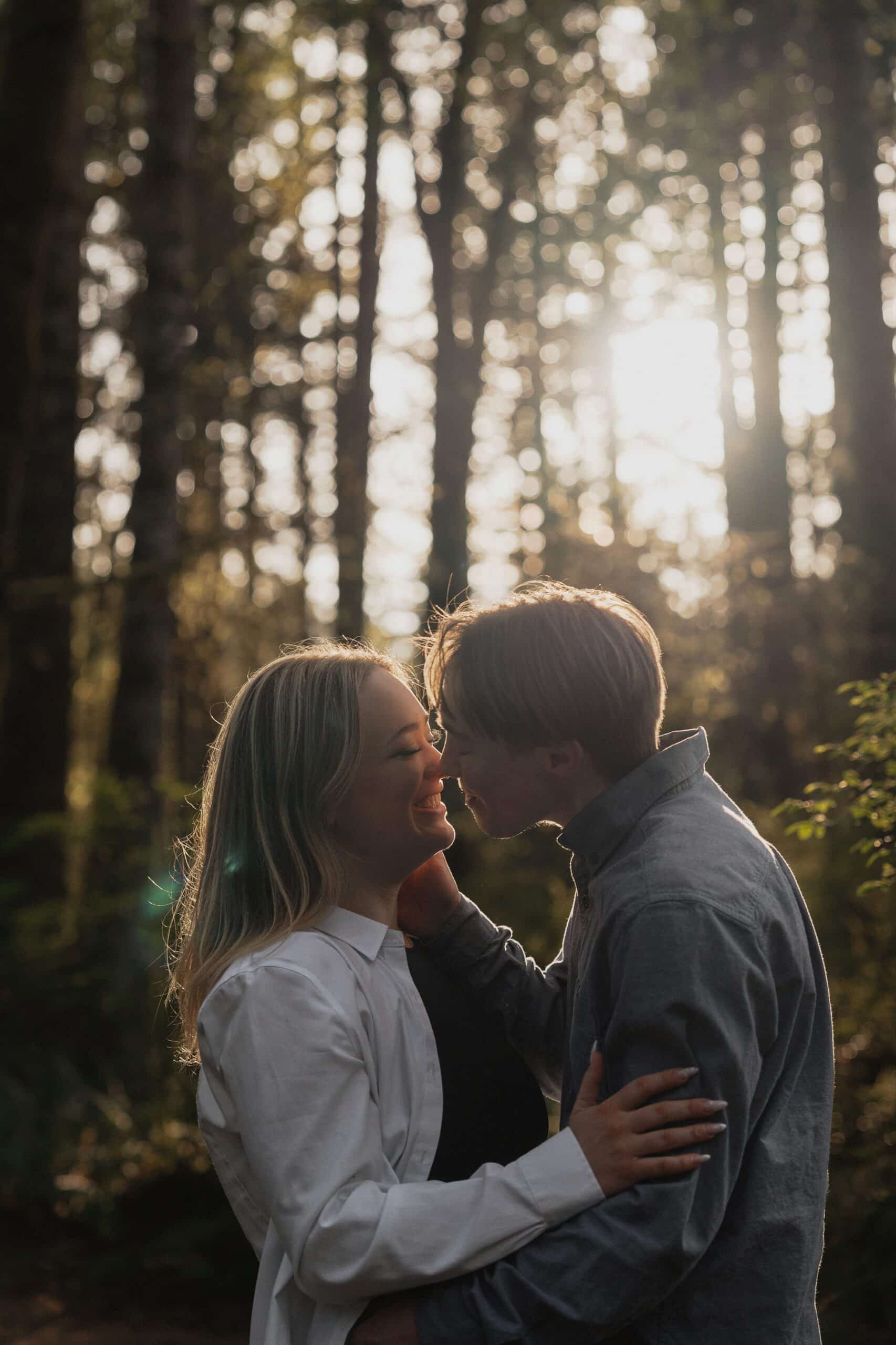
Cinematic wedding photography is a phrase that appears often in the wedding industry. Many photographers use the term, but few explain what it actually means or how it shapes the images couples receive.
At its core, cinematic photography is about emotion, atmosphere, and storytelling. It focuses less on documenting a checklist of moments and more on preserving the feeling of the day.
For couples planning a wedding on Vancouver Island, this approach often resonates deeply. The landscape itself encourages a more immersive style of photography. Ocean air moves through veils and dresses. Forest light filters through tall Douglas fir trees. Weather shifts quickly and dramatically. These natural elements create visual depth that cinematic photography embraces.
Understanding what cinematic photography truly means can help couples choose a photographer whose work aligns with how they want their wedding to feel when they look back on it years from now.
What Cinematic Wedding Photography Actually Means
Cinematic wedding photography is a storytelling approach that emphasizes atmosphere, emotion, movement, and light. Instead of focusing only on posed moments, it captures the day in a way that feels immersive and emotionally layered.
In practical terms, cinematic photography prioritizes:
Light that shapes mood and dimension
Movement that creates life within the frame
Composition that feels intentional and balanced
Moments that unfold naturally without heavy interruption
A cinematic image should feel like a scene from a film. When you look at it, you should sense what was happening before and after the moment the shutter was pressed.
Rather than simply documenting that an event occurred, cinematic photography captures how the moment felt.
For example, a traditional image of a couple walking together might simply show them smiling at the camera. A cinematic interpretation might show them walking through wind along the shoreline at Kye Bay in Comox, their hair moving in the ocean breeze while late evening light softens the horizon behind them.
The photograph becomes less about the pose and more about the experience.
How Cinematic Wedding Photography Differs From Traditional Wedding Photography
Traditional wedding photography developed from portrait studio traditions. It often focuses on structured poses, controlled lighting, and clearly documented moments.
While this style still has its place, cinematic photography approaches the day differently.
Traditional wedding photography often prioritizes:
Direct posing and instruction
Centered compositions
Consistent lighting and exposure
Documenting key moments exactly as they happen
Cinematic wedding photography shifts the focus toward storytelling and visual atmosphere.
Instead of directing every interaction, the photographer observes more closely and steps in only when guidance helps strengthen the image.
Moments are allowed to unfold naturally. Emotion is prioritized over perfection. Movement and environment become part of the story.
For example, rather than placing a couple in a static pose with the ocean behind them, a cinematic photographer might ask them to walk together along the shoreline while the wind moves through their clothing and waves crash softly nearby.
The resulting image feels more alive.
This balance between observation and direction allows couples to remain present in their day while still creating images that feel intentional and refined.
Why Lighting and Atmosphere Matter
Lighting is one of the defining elements of cinematic photography.
Light shapes the mood of an image. It creates depth, contrast, and visual emotion. Cinematic photographers pay close attention to how natural light interacts with a scene.
On Vancouver Island, light behaves differently depending on location and time of year.
Along the coast near places like Tofino or Ucluelet, light often becomes soft and diffused as clouds roll in from the Pacific. Forest locations in the Comox Valley filter sunlight through layers of evergreen trees, creating textured shadows and highlights.
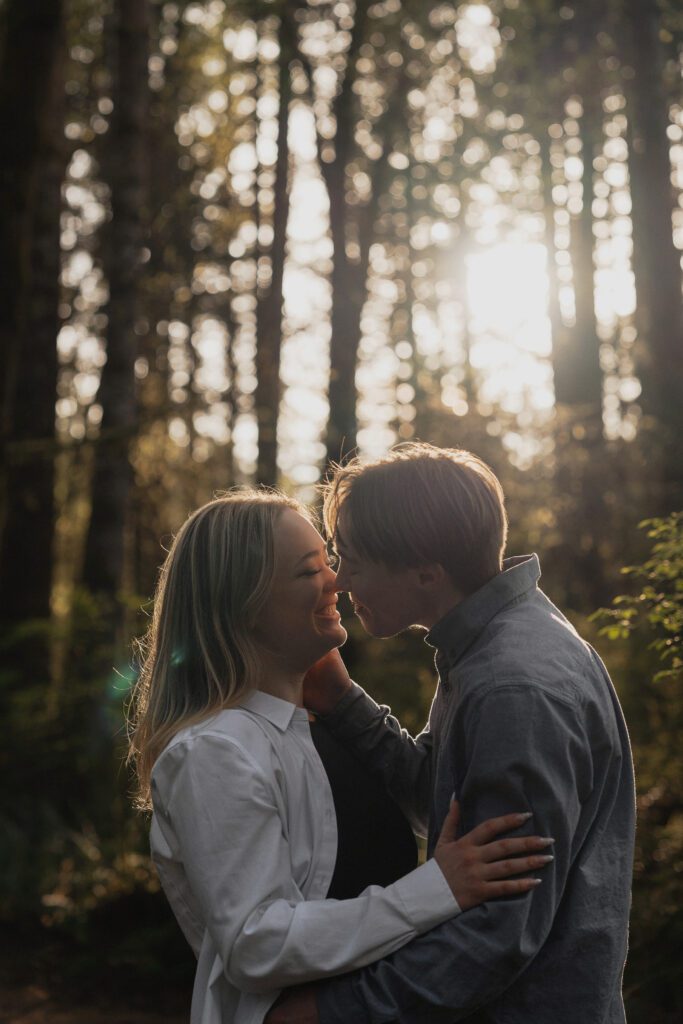
These conditions create atmosphere that cinematic photography embraces rather than fights.
Instead of relying heavily on artificial lighting setups, cinematic photographers often position couples where natural light creates dimension and emotion.
Backlit sunset portraits, soft window light during morning preparations, and the glow of evening reception lights all contribute to the visual story.
Atmosphere is not something that can be manufactured easily. It is discovered and used intentionally.
This awareness of light allows images to feel layered and immersive rather than flat.
How Movement Creates Cinematic Imagery
Movement is another defining characteristic of cinematic photography.
Life rarely happens in still frames. People laugh, walk, turn toward each other, reach for hands, and react to the energy around them.
Cinematic photography embraces this movement rather than freezing every moment into a static pose.
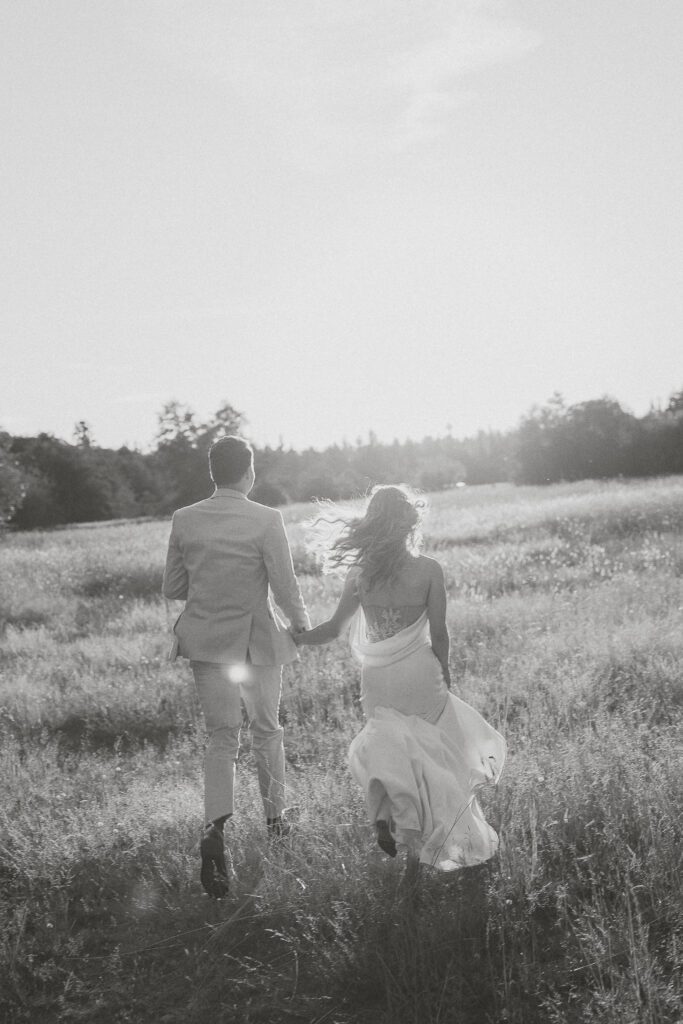
Simple prompts often create natural interaction. A couple walking together through tall grass. A quiet embrace during sunset along the shoreline. Friends laughing during cocktail hour as the wind moves through their clothing.
Movement creates energy inside the frame. It allows the viewer to feel like they are witnessing a moment rather than looking at a staged photograph.
On Vancouver Island, natural elements amplify this effect. Wind along the coast moves dresses and veils. Ocean waves add rhythm to the background. Forest branches shift gently above a couple during portraits.
These subtle elements add life to an image.
The goal is not chaos or blur. The goal is controlled movement that feels authentic.
When done well, it adds depth and realism to wedding imagery.
The Role of Storytelling in Cinematic Photography
Cinematic wedding photography is ultimately about storytelling.
A wedding day is not one moment. It is a sequence of experiences that build emotional depth over time.
Storytelling photography captures those layers.
It documents the quiet anticipation during morning preparations. The nervous excitement before the ceremony begins. The laughter and connection during portraits. The energy of the reception as the evening unfolds.
Each photograph contributes to the larger narrative.
Instead of delivering a gallery that feels like isolated moments, cinematic photography creates a visual story that flows naturally from beginning to end.
Details become important pieces of this narrative. A handwritten note exchanged before the ceremony. The way a parent reacts during vows. The subtle glance between partners during dinner speeches.
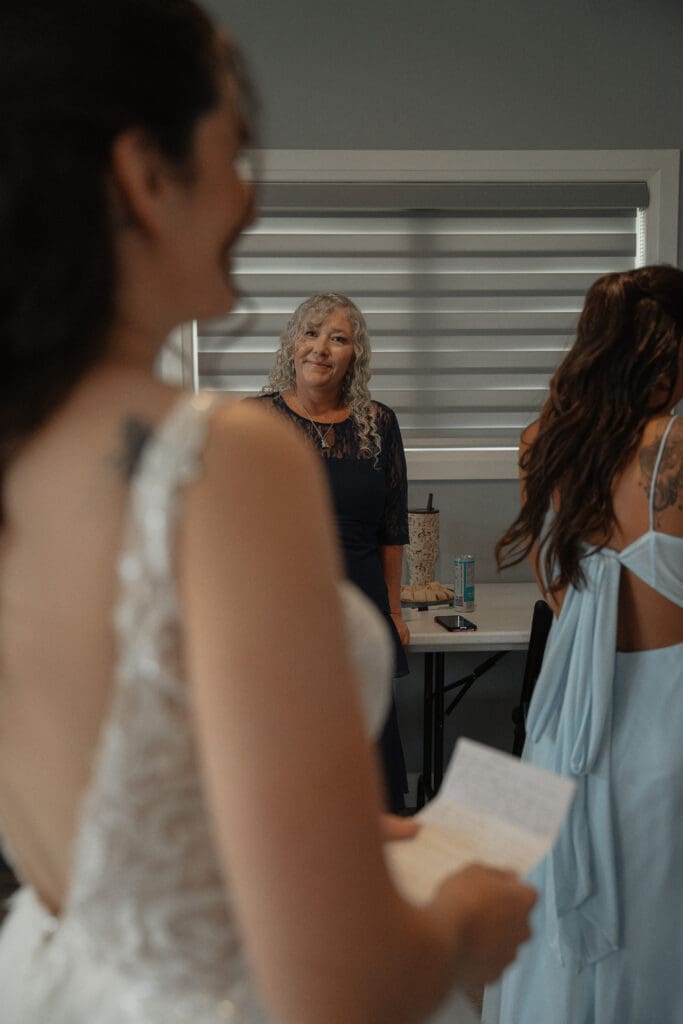
These moments may seem small when they happen. Yet they often become some of the most meaningful photographs years later.
This storytelling approach is why cinematic photography often pairs naturally with documentary techniques.
The photographer observes, anticipates, and captures moments as they unfold while occasionally guiding couples into environments where light and composition elevate the image.
The Blend of Documentary and Editorial Direction
Many couples worry that cinematic photography means they will receive little direction. In reality, the strongest cinematic wedding photography blends documentary observation with editorial refinement.
Documentary techniques allow genuine moments to unfold naturally.
Editorial guidance ensures that portraits feel intentional and visually strong.
During portraits, a photographer might provide simple direction such as walking together, turning toward one another, or pausing briefly in a specific location where light is strongest.
The interaction remains natural, but the composition becomes more refined.
This blend creates imagery that feels both authentic and elevated.
It also helps couples who may feel nervous in front of the camera relax into the experience.
Instead of performing poses, they simply interact with each other while the photographer guides the environment around them.
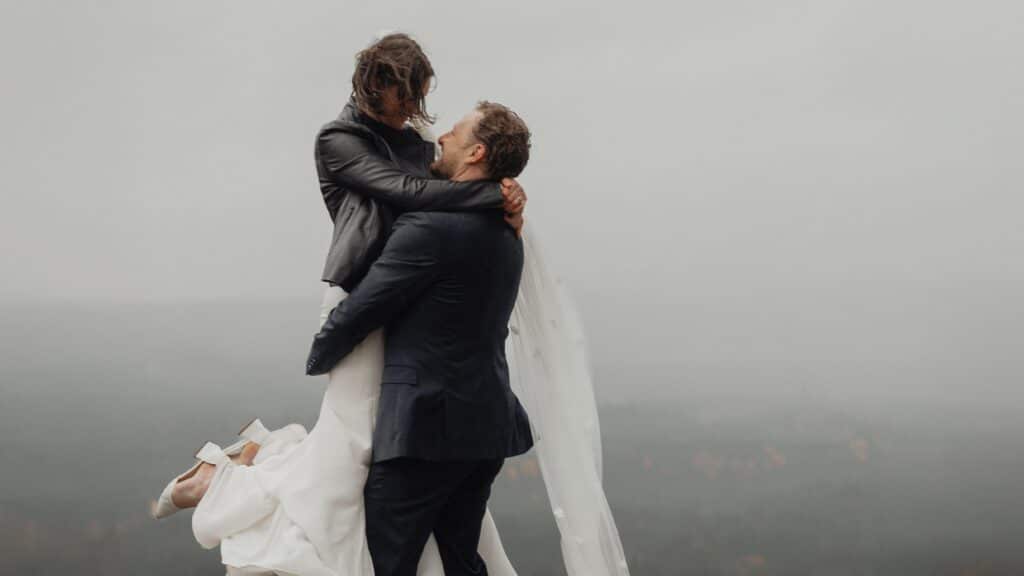
Why Cinematic Photography Works Beautifully on Vancouver Island
Vancouver Island offers landscapes that naturally support cinematic photography.
Coastal cliffs, misty forests, and dramatic weather create atmosphere that enhances storytelling imagery.
Locations like Airforce Beach near Comox, the forests around Mount Washington, and coastal spaces along the Pacific Rim provide dynamic backdrops where light and environment shift throughout the day.
Even small changes in weather can create beautiful visual depth.
Overcast skies soften light and create rich tones. Evening sunsets along the ocean produce warm directional light that shapes silhouettes and movement.
Rather than trying to control the environment completely, cinematic photography embraces these natural elements.
This approach allows the landscape to become part of the story rather than simply a background.
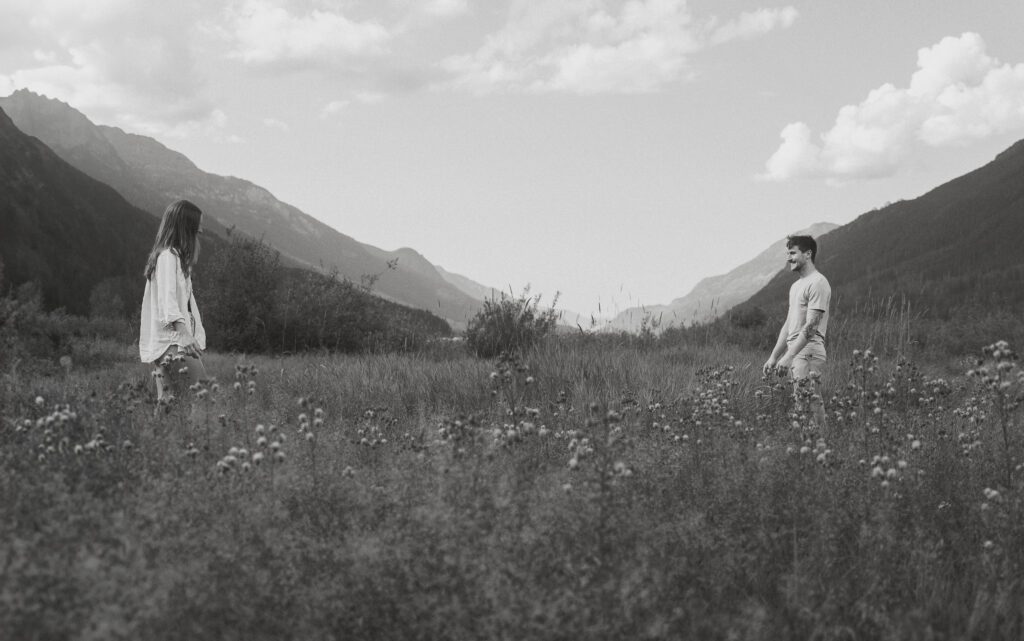
Is Cinematic Wedding Photography Right for You
Cinematic wedding photography is often the right fit for couples who care about the emotional experience of their wedding day as much as the images themselves.
This approach tends to resonate with couples who want:
A relaxed wedding day that does not feel overly staged
Images that capture atmosphere and emotion
Portraits that feel intentional but not rigid
A gallery that tells the full story of the day
Instead of feeling like they spent hours posing for photographs, couples often feel like they simply lived their day while the moments were documented thoughtfully.
The result is a gallery that feels immersive and personal.
Frequently Asked Questions
What makes wedding photography cinematic
Cinematic wedding photography focuses on storytelling, movement, and atmosphere. It uses natural light, environmental context, and emotional moments to create images that feel immersive and expressive.
Does cinematic photography mean fewer posed photos
Not necessarily. Cinematic photography still includes portraits, but they are guided in a way that feels natural rather than heavily posed. Movement and interaction often replace rigid posing.
Is cinematic photography the same as documentary photography
Documentary photography focuses on capturing moments exactly as they unfold. Cinematic photography often blends documentary observation with intentional composition and subtle direction.
Does cinematic photography require dramatic locations
Beautiful landscapes help, but cinematic photography is primarily about light, composition, and storytelling. Even simple locations can feel cinematic when photographed intentionally.
How does cinematic photography affect a wedding timeline
A thoughtful timeline allows space for natural moments, good light, and relaxed portraits. Many couples choose timelines that include sunset portraits or quiet moments together to strengthen the storytelling.
For Couples Planning a Cinematic Wedding Experience
If you are drawn to wedding photography that feels atmospheric, emotional, and deeply connected to the experience of your day, cinematic storytelling may be exactly what you are looking for.
My approach blends documentary awareness with editorial refinement. I guide when it strengthens the image and step back when real moments deserve space to unfold.
The result is a wedding gallery that feels intentional, immersive, and personal.
If you are planning a wedding on Vancouver Island and want photography that captures the atmosphere and emotion of the day, you can explore more about my approach through Latitude 49 Photography or reach out through the contact page to start the conversation.