
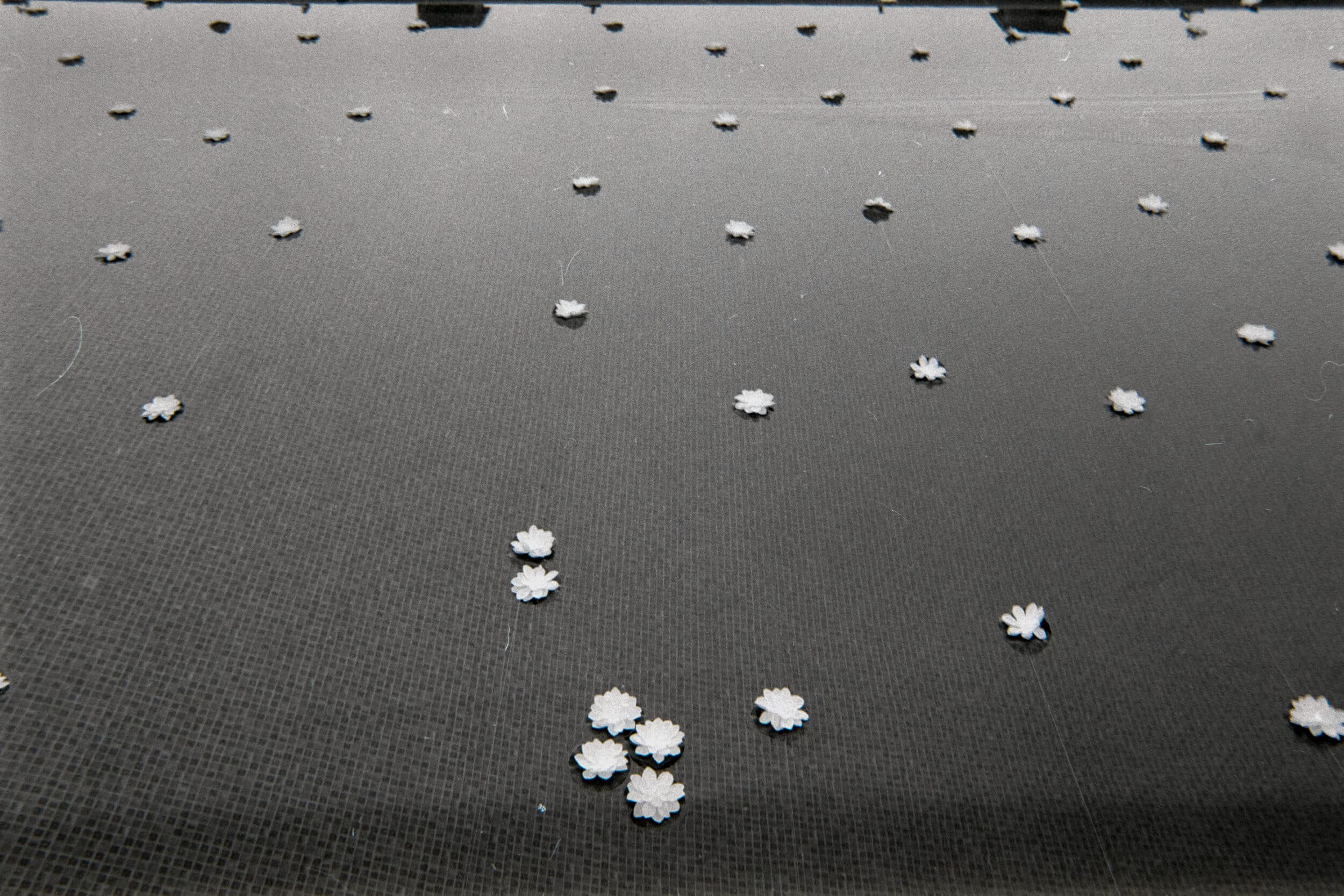
Film Wedding Photographer on Vancouver Island
CATEGORY
POSTED
Film has officially found its way into my camera bag.
I now offer film wedding photography on Vancouver Island alongside the digital coverage that has always been at the core of my work. That includes both 35mm and medium format film, used throughout weddings and elopements when the format makes sense for the light, the moment and the pace of the day.
I’m not replacing digital photography, and I’m not trying to make every wedding look like it happened in 1978.
I’m interested in what happens when the two formats work together.
Digital gives me speed, flexibility and the ability to react immediately to whatever is happening in front of me. Film gives me texture, grain, colour and a completely different way of approaching a frame.
Together, they give me more ways to tell the same story.

Why I Photograph Weddings on Both Digital + Film
There are things I love about digital photography that I have absolutely no interest in giving up.
A wedding moves quickly. Someone laughs across the room during a speech. A kid tears across the dance floor. Your grandmother reaches for your hand. The light changes. Someone opens a bottle of champagne when nobody is quite prepared for it.
Those moments don’t wait for a photographer.
Digital allows me to respond immediately and photograph heavily when the energy of the day calls for it.
Film works differently.
With a limited number of frames on each roll, I naturally slow down before pressing the shutter. I pay more attention to the light, composition and what is happening within the frame.
And then there is the photograph itself.
Film has visible grain. Colour behaves differently. Highlights can feel softer. There can be slight variations from one frame to another that I wouldn’t necessarily create when editing a digital photograph.
Those characteristics aren’t defects I’m trying to correct.
They’re part of the medium.
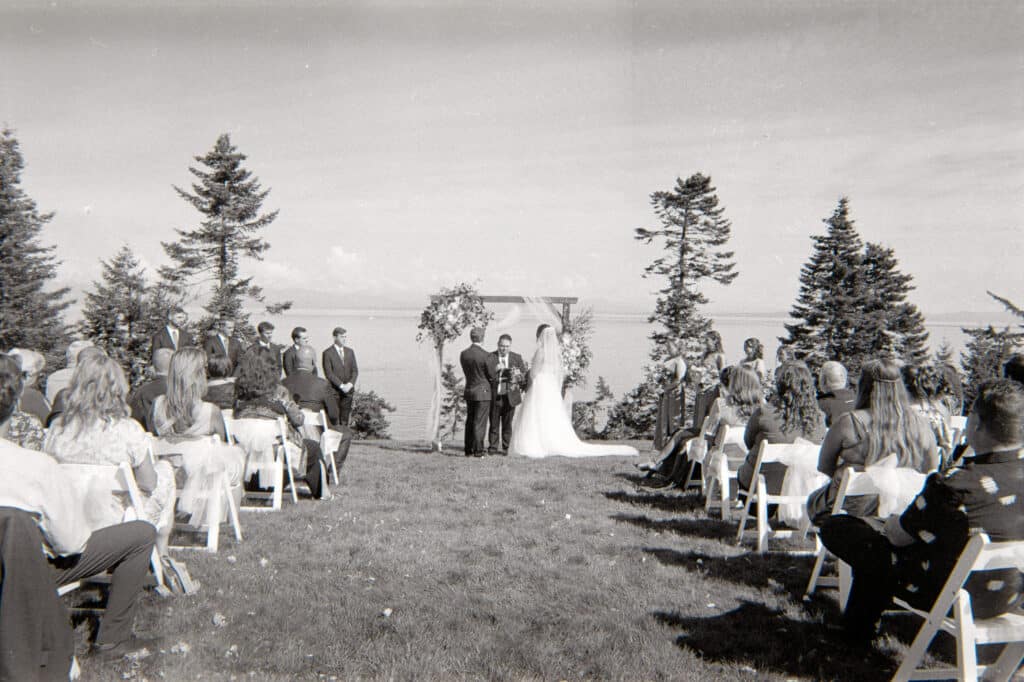
I’m also not interested in film purely because it looks nostalgic.
I don’t think a photograph automatically becomes more meaningful because it was taken on a roll of Kodak instead of a memory card.
What interests me is having another photographic tool available and knowing when to use it.
Sometimes that is a portrait with beautiful directional light. Sometimes it is a quiet moment while everyone is getting ready. Maybe it is a completely ordinary frame that becomes one of my favourites because of the colour, movement or grain.
Film doesn’t replace the way I photograph weddings.
It expands it.
What Film Looks Like Alongside Digital Wedding Photography
One of the biggest questions about hybrid wedding photography is whether the film photographs will actually belong beside the digital ones.
They should.
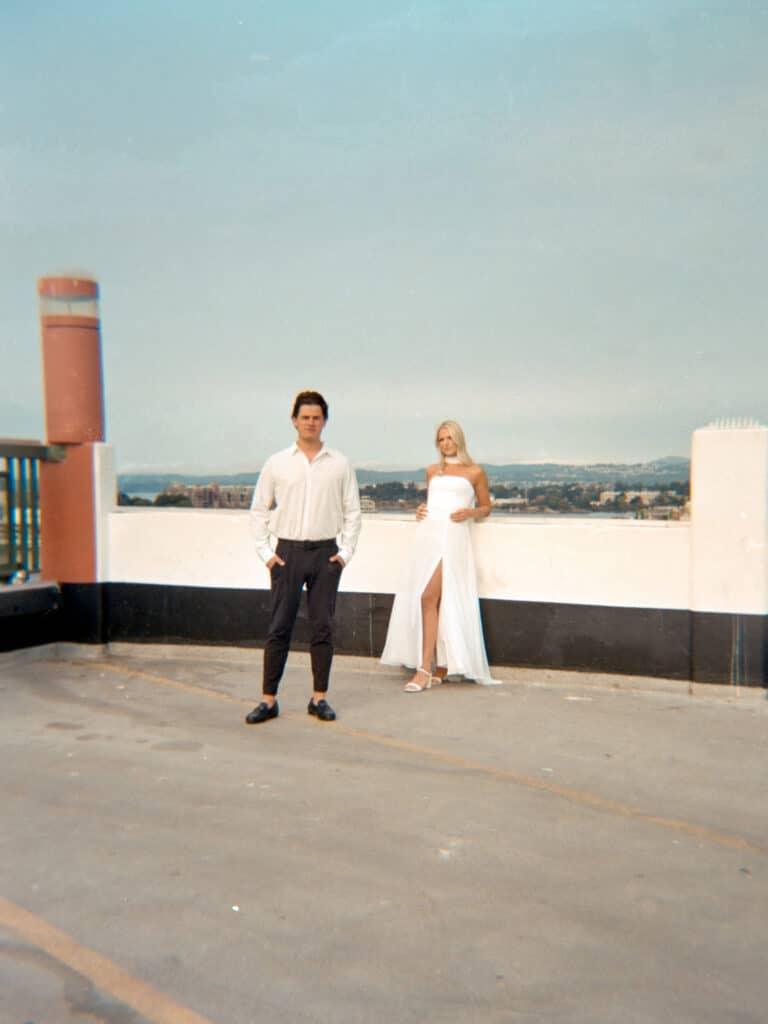
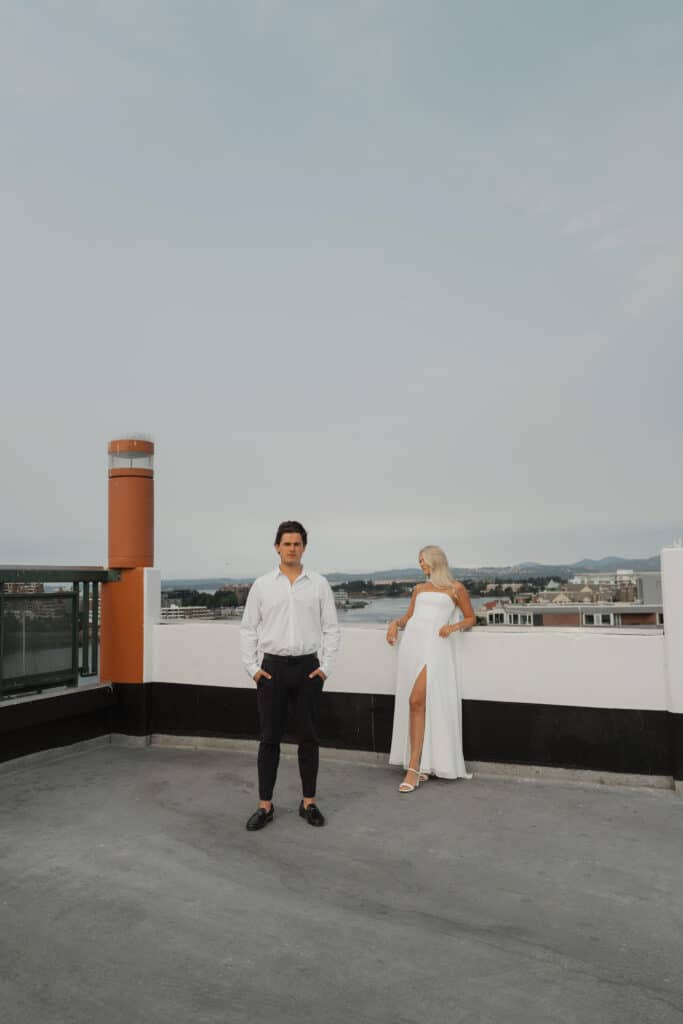
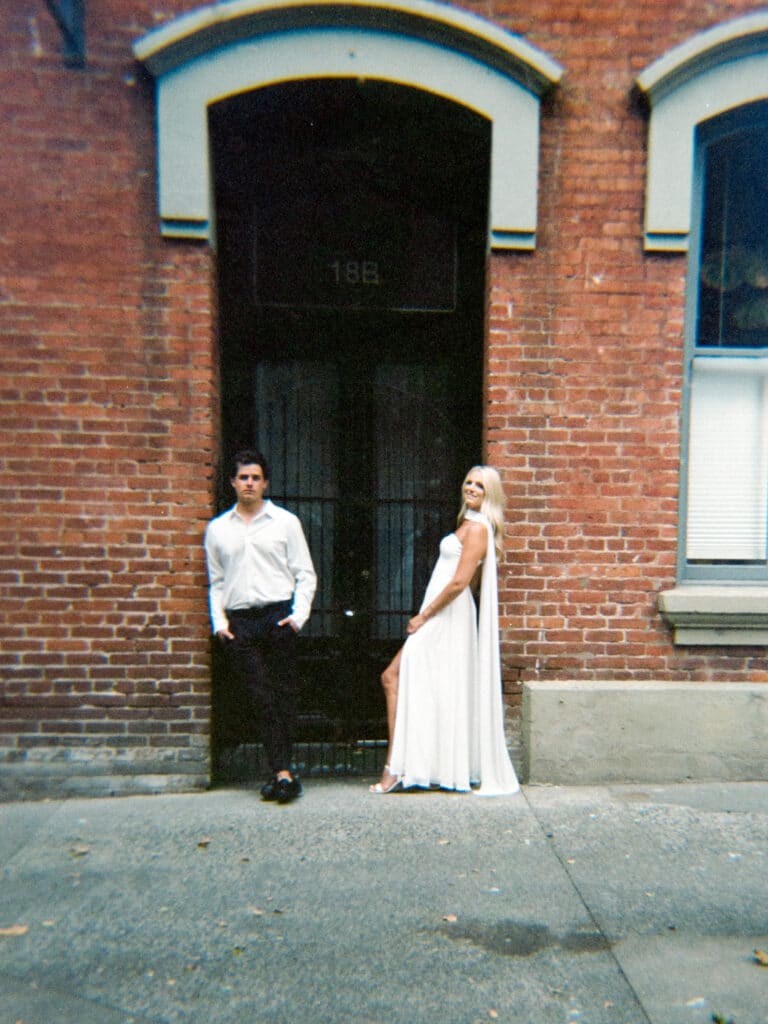

My goal isn’t to deliver two completely different galleries.
Your film photographs are incorporated into the same final body of work as your digital images. You’ll move through getting ready, the ceremony, portraits, dinner and the dance floor and find film frames appearing naturally throughout the story.
There will be differences.
That’s the point.
Digital tends to be cleaner and more precise. Film has grain and natural variation. Certain colours render differently. Movement can feel a little less polished. Occasionally a frame is technically imperfect and still works because of what is happening inside it.
The important part is that both still look like my work.
The same attention to composition, environment, people and light exists regardless of which camera I’m holding.
For me, hybrid coverage isn’t about trying to make my digital photographs imitate film, either.
I want each medium to retain some of its own character while the complete gallery still feels cohesive.
35mm vs Medium Format Film for Weddings
I currently photograph film in two formats: 35mm and medium format.
You absolutely do not need to become a film expert before deciding whether you want it included in your wedding.
The easiest way to understand the difference is simply by looking at the photographs.
35mm Film
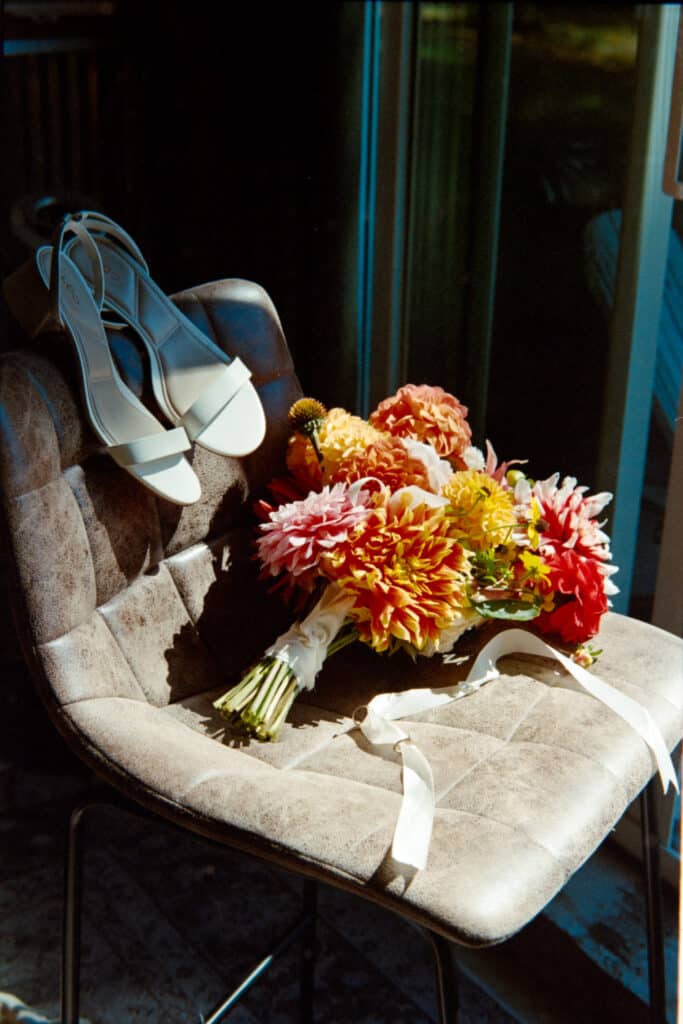
35mm is the smaller format and tends to have more visible grain.
I particularly like it for documentary photographs, movement, receptions and less structured parts of a wedding day. There is a looseness to it that works incredibly well beside the cleaner files from my digital cameras.
It’s also relatively quick to work with, which matters during a wedding.
Medium Format Film

Medium format uses a considerably larger negative.
The resulting photographs generally have finer detail and a different depth and tonality than 35mm. I tend to reach for it when I have slightly more time to build a frame rather than during the fastest parts of the day.
It works beautifully for portraits, details and environmental photographs where the scene itself deserves some room.
Neither is inherently better.
They simply give me different tools to work with.
Why I Don’t Photograph an Entire Wedding on Film
This is deliberate.
Digital gives me the speed and flexibility I need to document a wedding as it unfolds. Film asks me to slow down.
I like having both.
There are portions of a wedding where things are happening simultaneously and constantly. During a ceremony, speeches or a packed dance floor, my priority is documenting what is actually happening rather than forcing the day to fit the limitations of a particular format.
Digital is exceptionally good at that.
Then there are moments where the pace changes.
The light coming through a window while you’re getting ready. A few minutes alone after the ceremony. Portraits outside before dinner. The tables before everyone sits down. The strange and excellent things people start doing on a dance floor after 10 p.m.
Those are often the moments when I’ll reach for a film camera.
I’m not interested in choosing film over digital simply because film currently has a certain aesthetic attached to it.
I want to use whichever camera gives me the photograph I want while allowing your wedding to keep moving naturally.
That balance is ultimately what hybrid wedding photography means to me.
How Film Is Added to Your Wedding Coverage
Film is available alongside my regular wedding and elopement photography coverage.
You do not need to build your timeline around it, set aside an hour for “film photos” or suddenly turn your wedding into a styled shoot.
I bring my film cameras alongside my regular digital kit and use them throughout the coverage where they make sense.
That might include getting ready, details, portraits, the ceremony, cocktail hour, reception or the dance floor.
The exact number and type of photographs will naturally vary because film isn’t photographed with the same volume as digital.
That’s part of the reason I like it.
Rather than trying to produce hundreds of film photographs, I’m looking for the frames where the medium actually adds something to the final gallery.
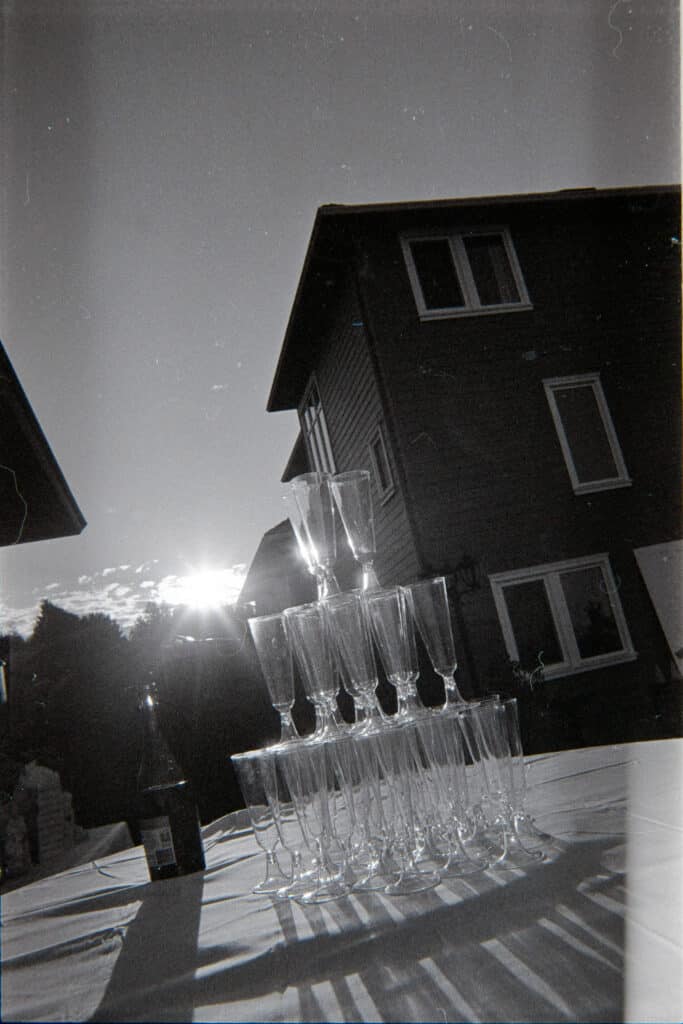
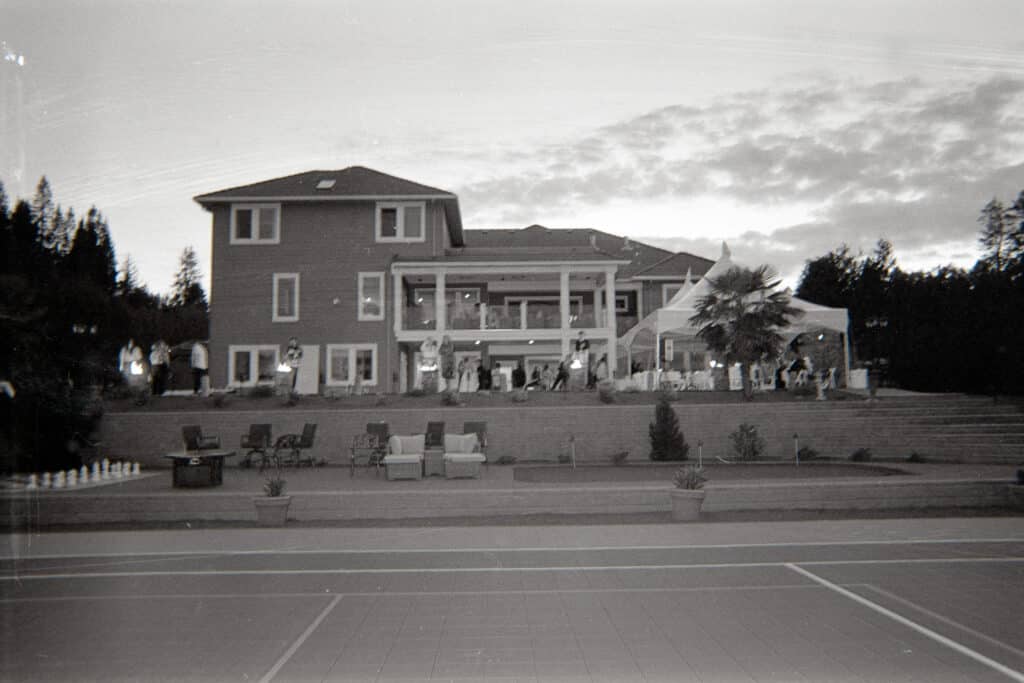
Your digital photography remains the foundation of your coverage.
Film becomes another layer within it.
If film is important to you, we can also talk about that while planning your wedding photography so I know you want it to have a stronger presence within the gallery.
Do You Develop Your Own Film?
Yes.
And weirdly enough, this has become one of my favourite parts of adding film to my work.
After photographing the roll, I don’t simply send it away and wait for finished scans to come back.
I develop my own film, scan the negatives myself and work with those photographs before incorporating the finished frames into your wedding gallery.
That means I’m involved in the photograph from the moment I press the shutter until the finished image is delivered.
There is something very different about physically handling the negatives that came out of a wedding I photographed.
With digital photography, the image moves almost immediately from camera to computer. Film has another physical stage in between.
I photograph it, develop it.
I see the negatives for the first time, scan them and process them.
Then those frames eventually sit beside the digital photographs from the same wedding.
I don’t think couples need to care about the chemistry, tanks or technical side of developing film. That’s my problem.
What matters is that the process gives me another level of involvement in creating the finished photographs rather than outsourcing that stage of the work.
And yes, there is still something mildly terrifying about opening a developing tank and hoping there are photographs on the roll.
So far, that’s part of the fun.
Does Film Change the Way Your Wedding Is Photographed?
Not in the way you might expect.
You aren’t going to spend significantly more time taking photographs because film is included.
My overall approach remains documentary with an editorial edge. Most of the wedding is allowed to unfold without interference, with guidance when it is actually useful for portraits, family photographs or difficult light.
Film fits within that approach rather than changing it.
If anything, it gives me another reason to pay attention to the quieter frames between the obvious photographs.
A hand resting on someone’s shoulder.
Half-finished drinks on a table.
Your veil moving in the wind.
Someone standing alone outside the reception for thirty seconds.
The landscape surrounding the place you chose to get married.
Not every photograph needs to be the photograph.
Sometimes the smaller frames are what make a wedding gallery feel complete.
Film Wedding Photography on Vancouver Island
Vancouver Island gives film a lot to work with.
The environments here change constantly, sometimes within the same wedding day.
You can move from a dark cedar forest into open coastal light, from overcast skies to direct afternoon sun, or from an outdoor ceremony into a candlelit reception.
Those changes are part of photographing weddings here.
I’m based in the Comox Valley and photograph weddings and elopements throughout Vancouver Island, including Courtenay, Comox, Cumberland, Campbell River, Nanaimo, Parksville, Qualicum Beach, Victoria, Tofino and Ucluelet.
I also travel throughout British Columbia and for destination weddings.
Film works particularly well with the environmental side of my photography.
I don’t want Vancouver Island to become a generic green backdrop behind a couple. The coast, mountains, forests, weather and changing light are part of what the day actually looked like.
Sometimes digital is the right way to photograph that and sometimes it’s 35mm.
Having all three available means I don’t have to make that decision before the wedding even begins.
I can make it when I’m standing there with you.
Frequently Asked Questions About Film Wedding Photography
Can our entire wedding be photographed on film?
My wedding coverage is built around a combination of digital and film rather than film-only photography. Digital allows me to document fast and unpredictable parts of a wedding without sacrificing coverage, while film is used throughout the day where its particular character adds something to the photographs.
Will our film photographs look completely different from our digital photographs?
There will be visible differences in grain, colour, texture and rendering, but the complete gallery is designed to feel cohesive. I’m still the photographer behind both cameras, and my approach to composition, light and storytelling doesn’t change with the format.
Do you photograph both 35mm and medium format film?
Yes. I use both 35mm and medium format depending on the scene and pace of the wedding. 35mm works particularly well for documentary moments and movement, while I often use medium format when I have more time to work with a portrait, detail or environmental frame.
Do you develop the film yourself?
Yes. I personally develop and scan the film I photograph before incorporating the finished images into your wedding gallery. This means your images stay with me throughout the entire developing process. No chance of your film being lost in transit.
Is film available for elopements or other sessions too?
Yes. Film can be incorporated into both wedding, elopement and all of my photography coverage.
Do we need extra photography time if we want film?
Generally, no. Film is photographed alongside my regular digital coverage rather than treated as a separate portion of your wedding timeline.
Where do you offer film wedding photography?
I’m based in the Comox Valley and photograph weddings throughout Vancouver Island, including Victoria, Nanaimo, Parksville, Qualicum Beach, Campbell River, Tofino and Ucluelet. I’m also available for weddings elsewhere in British Columbia.
Looking for a Film Wedding Photographer on Vancouver Island?
Adding film hasn’t changed what I’m looking for when I photograph a wedding.
I’m still watching for what actually happens.
The people who matter to you. The ridiculous things your friends do. The landscape surrounding the day. The nervous few minutes before the ceremony. The reaction you didn’t see because you were looking somewhere else.
Now, some of those photographs happen to be made on a roll of film.
If you’re drawn to wedding photography that combines documentary coverage, refined portraits and the character of 35mm and medium format film, you can explore my wedding collections, view full galleries or get in touch about your wedding.
9/26/2026
COMMENT LOVE